Game Books

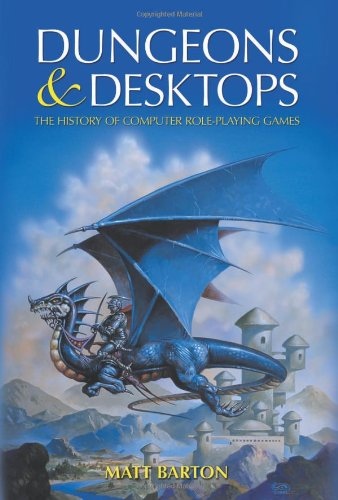
Some years ago I bought a read a book called Dungeons & Desktops, which is a history of computer RPGs.
20111218-191712.jpg

Although the writing is a bit dry, the book is comprehensive and intelligently written and I highly recommended if you’re interested in the topic. Since I’d played almost all of the games mentioned, it read almost like a diary and I still remember the book fondly.

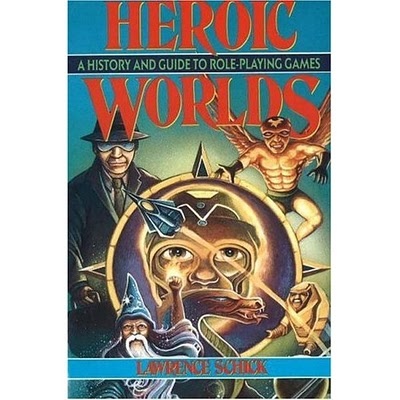
So when I recently discovered a book about the history of (pencil & paper) Role Playing Games, I had to get it.
20111218-192124.jpg

Published back in 1991 this is an old book and obviously somewhat out of date. It is, however, a staggeringly comprehensive history of RPGs and related products up until that date. The book is over 400 pages long, small print, and is about 95% lists of RPG products categorized by type or genre (‘Fantasy: Arthurian’, ‘Science Fiction: Dark Future’ and ‘Pirates and Swashbucklers’ for example). In addition the relevant game details, the author has provided a sentence or two (or many, in the case of the more famous games) describing the game.

Some examples…

“The rules are of moderate complexity; this is a skill-based system similar to the 2nd edition of Star Trek, not an introductory system” (Doctor Who RPG, FASA, 1985)

“Scenario in which Indy goes after one of the holy nails used in Christ’s crucifixion, an adventure that leads from Australia to Barcelona. Can be played solo or in a group.” (The Fourth Nail [Indiana Jones RPG module], TSR, 1985)

The last sentence in that second description caught my eye. “Can be played solo”? It’s interesting, skimming through the book (when I return from Australia I’m reading this cover to cover) how many modules for many different RPG systems can be played solo. I’ve made a note of that…

Happily the book includes a dedicated (23 page) section for ‘Solo Gamebooks’. In addition to the usual suspects, I discovered a few new series reading through this chapter. A quick click over to Amazon allowed me to already acquire a few books from these series:
20111218-194420.jpg

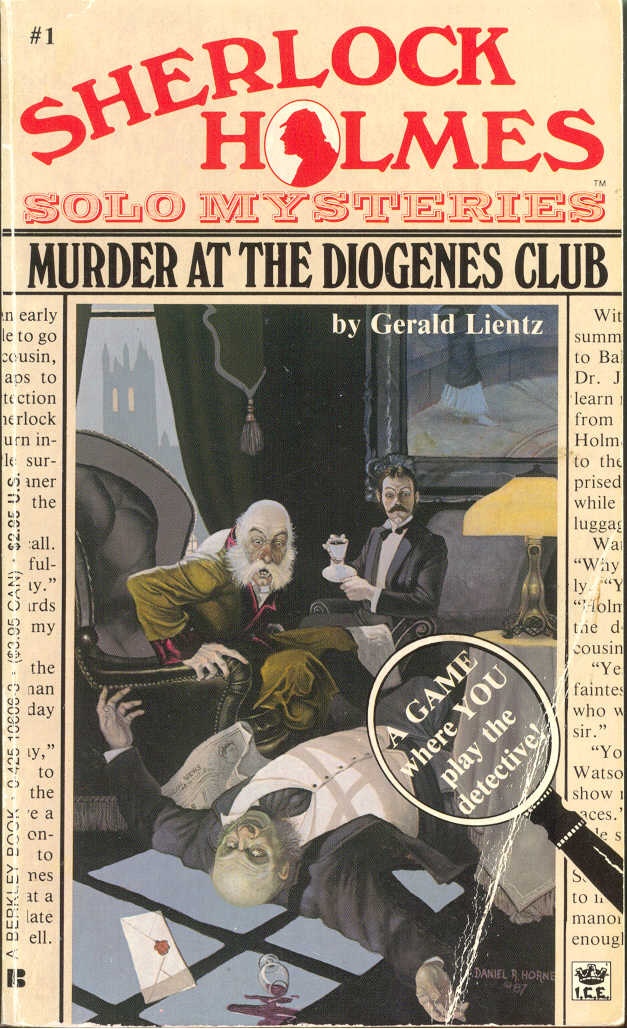
Ye gods! Compelling name aside, this looks to be a shockingly complex, high entry (674 in total) gamebook based around solving crimes with the somewhat-assistance of the famous detective. Looking forward to reading through this one when I get the time, since it’s highly reviewed on the gamebook sites (and in Heroic Worlds). I actually got the first two of the 9 total books in this series.
20111218-194620.jpg

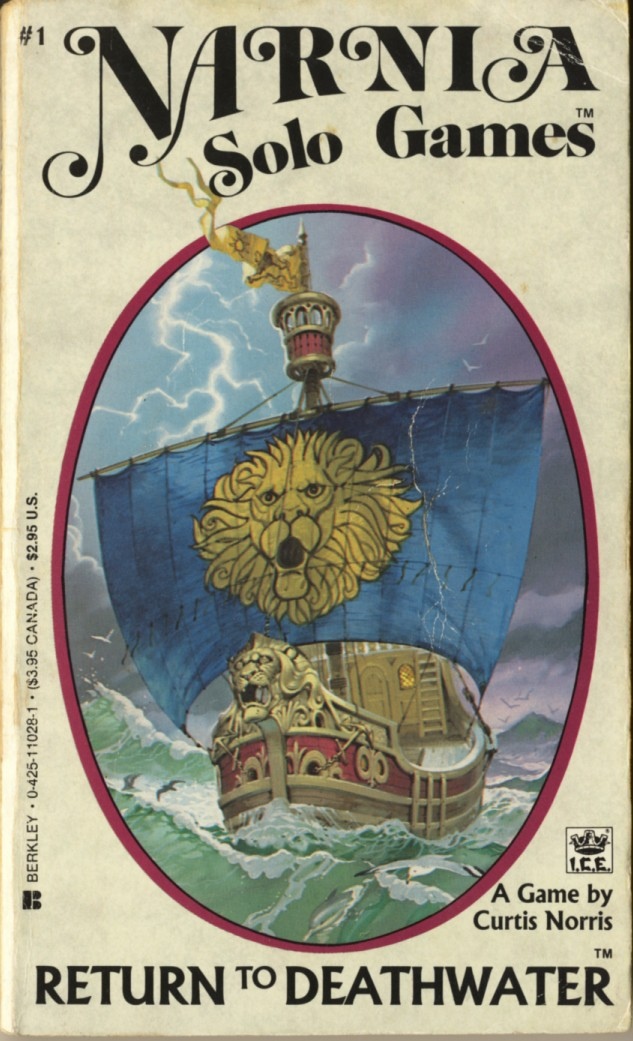
Iron Crown, in the 1980s, turned their pens to licensed Gamebooks. Their initial success was with the Lord Of The Rings books, and this led to the Sherlock Holmes and Narnia series. This is the first book in the latter, a lengthy (450 entry) telling an original story in a part of Narnia not discussed in the novels. It looks to be a complex system, but lacking combat. Should be an interesting read.
20111218-195031.jpg

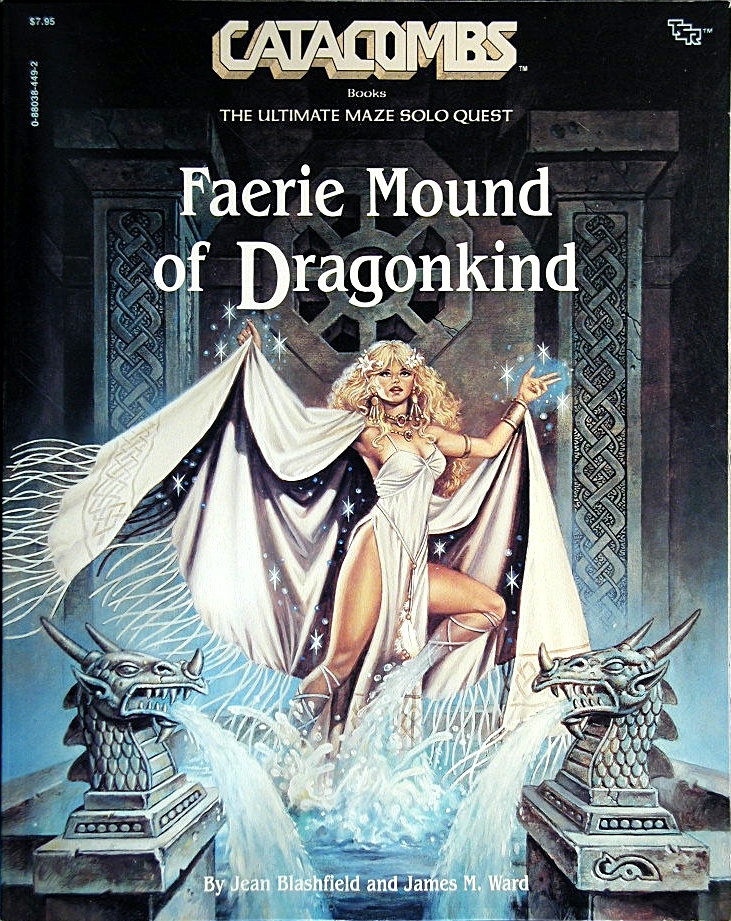
What an evocative cover! Sadly, it won’t arrive until after Christmas so I haven’t seen I inside yet, but this is one from a large format solo play gamebook series set in the Forgotten Realms TSR published in the late 1980s. If you’re keeping score, I think there are three different TSR gamebook series in total now! At any rate I’m looking forward to getting this one because what little I’ve read about it makes it sound a tad… unusual… 🙂

Next week I’m off to Australia. Every year I think to myself I couldn’t possibly find any new Gamebooks not yet in my collection, but then I do just that! I wonder if my luck will continue?
The Adamski Legacy

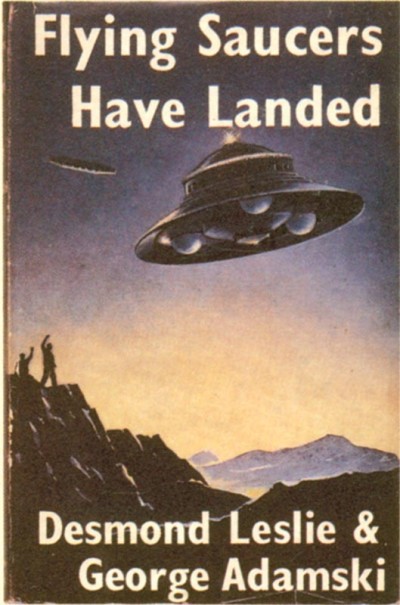
In 1946, an American named George Adamski saw his first UFO near a campground in California. He took some photos, but mostly kept the information to himself. A few years later he released a science fiction novel, and shortly thereafter saw more UFOs. Three years later (in 1953) he released the book that rocketed him to fame:

ufo-hoax-086b

It told the story of how he, in 1952, had met a visitor from Venus named Orthron. The Venusians, as it turned out, were friendly fellows, graciously watching over and guiding human development. And George Adamski was the one out of all of us chosen as our ambassador! This contact he had with the ‘Space Brothers’ led him to fame and fortune.

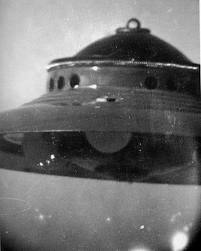
Of course such a story would be dismissed as drivel were it not for evidence. And he had that in spades, in the form of photos and a few short movies of the craft that the aliens flew in on:

121352a

images

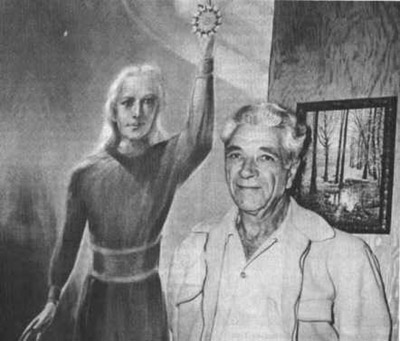
The above are two of his actual photos. Do they look familiar? Here’s a photo of Adamski himself next to a painting he did of one of the aliens he met.

adamski1

Adamski’s career as the first (and possibly still most famous) of the ‘UFO contactees’ took him all over the world. UFO’s were new in those days, and big business. Everyone wanted to hear about them and the aliens and the man that had met them. As Adamski grew more famous, so too did his stories become more astonishing. He met Martians and Saturnians, and went for rides in spaceships. He hinted he had been given rejuvenation technology as well, and that some aliens lived amongst us.

In fact at a now infamous UFO conference hosted by Adamski in the 1950s, some of those that attended believed that a group of 3 aloof audience members were Venusians in disguise. Here’s one of only two photographs of one of them; compare to the above painting.

howard02

Adamski’s aliens were the ‘Space Brothers’, which are now commonly referred to as ‘Nordic Aliens’. Tall, large boned and very white they were the master race of space; cosmic Aryans that had a strange allure to UFO fandom of the 1950’s through 1970’s. This would change of course, but I’ll get to that in a bit.

Adamski was of course debunked as a fraud and con-artist in his day. One famous story told of an interviewer who, when quizzing Adamski in his own home, noticed that a lampshade in the same room bore a striking resemblance to the UFO’s in the photographs. Others have claimed the photos show a chicken brooder or the top of an espresso machine from the 1940’s.

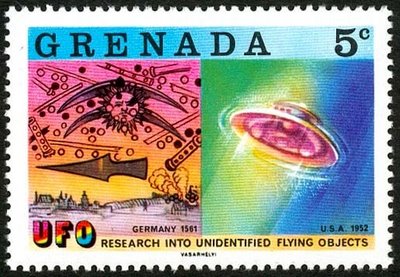
But whether they are real or not, Adamski’s photos would live forever. You see they were the very first exposure many people had to actual UFO images (the Roswell crash incident did not have any photos to go with it) and in the minds of many became synonymous with what UFO’s are supposed to look like. They entered popular culture. Adamski’s saucers did not just look like UFO’s, UFO’s looked like Adamski’s saucers.

grenada1

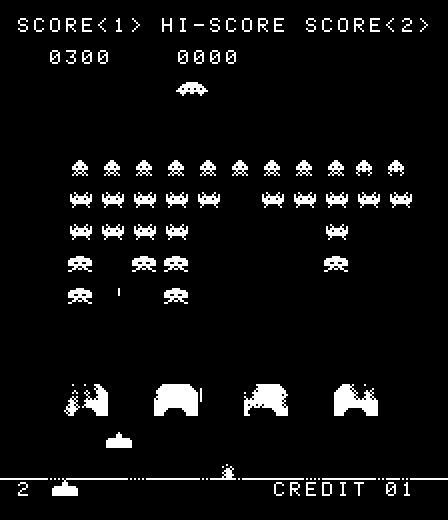
The stamp is from 1978. Note the ‘Adamski type’ UFO. Of course this wasn’t the only repurpose of the image in that year. Do you remember this one:

space_invaders_screenshot

Look at ‘the UFO’ at the top. Yep, it’s Adamski-type.

In the 1980’s UFOlogy took off in a big way. Adamski had died in the late 1970’s, claiming the truth of his stories (and photos) until the end. But even the UFO scholars had trouble believing the whole ‘Venusian’ thing. So if they were not from Venus, from whence came these mysterious craft?

How about… the Nazis!

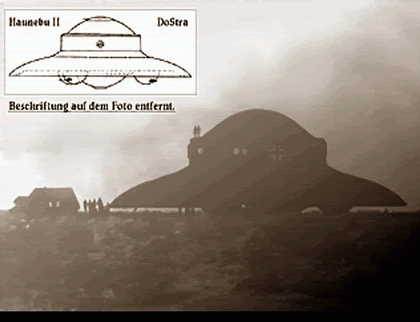
ee

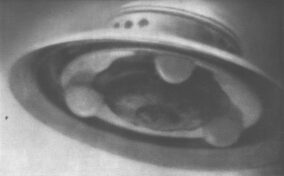
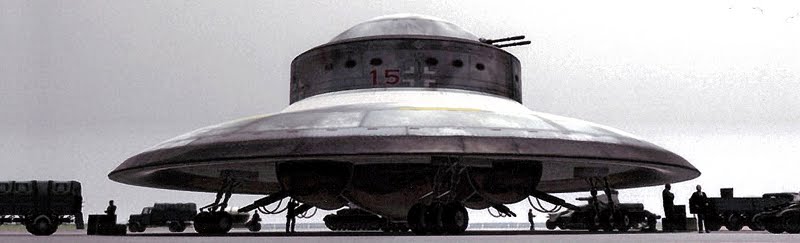
Here’s where things get really complicated. ‘Serious’ researchers of the ‘Nazi UFO Theory’ speak of numerous craft designed by the Nazi’s and built in secret bases or an ‘invisible to the Allies’ research facility in the German-controlled Antarctic province New Swabia. One of these UFOs, called ‘Haunebu’ is shown above. Look familiar? Here’s another shot:

gg

Evocative isn’t it?

Hopefully I haven’t lost you because the Nazi UFO theorists have worked out who the Space Brothers were as well, which is to say they theorize that Adamski wasn’t the first contact. You see these UFO’s weren’t solely the work of man… Hitler had help from aliens! And to facilitate that help the Nazi’s had a crew of super-psychics whose job it was to communicate with the aliens. Some have alleged that these psychics, all of which demonstrated the Aryan ideal of beauty, strength and whiteness may have been (Nordic) aliens themselves. Here’s a photo of the leader of that squad, the very lovely Maria Orsic:

maria-orsic

Her whereabouts after the war are unknown. Some believe she was one of those that escaped through spacetime in ‘The Bell’, a Nazi time machine built using extraterrestrial superscience. But whatever happened to her… was she an alien? What do those eyes say to you?

There are two competing stories here. I’ll summarize them for you:

Version One: Aliens from Aldebaran helped the Nazi’s build UFOs that were covered up (or possibly remained undiscovered) by the Allies after the war. Adamski saw either humans testing these very craft, or perhaps was contacted by the very same aliens that had tried to help Hitler.

Version Two: It’s ALL one massive, massive lie. There never were any Nazi UFOs, or Aldebarans. Mario Orsic is just a pretty frau from the fatherland. Adamski was a liar, who made up a story and ran with it when it made him famous (a business model which, I may suggest, Whitley Streiber perfected in the 1990’s). His UFO’s were household appliances or home-made models.

Which is the truth? That, my friends, is for you to decide.

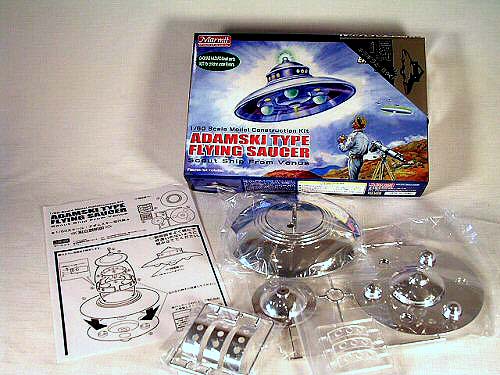
adamkitinside

But (and I’m nearly finished here), since Adamski was so famous not only for the UFO’s (and the iconic design) but also for the Space Brothers, why did the UFO image persist but not the Nordic Aliens? Most people these days would clearly identify the photos above as UFO’s but say the first shot of a girl was just a Uma Therman lookalike. Why don’t people think ‘Aryan’ when they hear ‘Alien’ any more?

This is the answer:

grey alien 2

The photo is from, of course, Close Encounters Of The Third Kind. Interesting how a film could influence the public perception of aliens in such a major way isn’t it? Other things over the years (Communion, X-Files, Roswell ‘autopsy videos’ etc.) drove the point home until Nordic Aliens were a forgotten wrinkle in the history of UFOlogy.

And so ends todays post; the 16th in my ’25 Days Of Christmas’ series. In case you forgot, here’s the (wonderful!) logo again 🙂

Picture 1